Busan Public Transportation Guide 2026: How to Use the Subway and Buses
Last updated: August 2026
Information checked: August 2026
Using public transportation is one of the easiest parts of living in Busan once you understand a few basic rules.
The city has a subway network, local and express buses, the Busan-Gimhae Light Rail Transit, and the Donghae Line. For most daily trips, you can travel around Busan without owning a car.
The simplest setup is:
Buy a rechargeable transportation card, use the subway for longer and simpler trips, and use buses for places the subway does not reach well.
For long-term foreign residents, Busan also has the Prepaid Dongbaek Pass, which can refund part of your monthly public transportation spending when you meet the program requirements.
This Busan Public Transportation Guide explains what you actually need to know before using the system.
Quick Answer: How Do You Use Public Transportation in Busan?
For most newcomers:
| Situation | Best option |
|---|---|
| First few days in Busan | Rechargeable transportation card |
| Traveling between major areas | Subway |
| Reaching residential neighborhoods | Local bus |
| Going to hillside areas | Bus |
| Gimhae Airport to the city | Busan-Gimhae Light Rail + Metro |
| Frequent long-term commuting | Check Dongbaek Pass |
| Child aged 6–12 | Registered children’s transit card |
| Traveling toward Gijang or east coast | Donghae Line may be useful |
Prepaid transportation cards are available at locations including metro stations and convenience stores and can be used on Busan’s metro and buses.
Table of Contents
- Understanding Busan’s Transportation System
- How to Use the Busan Subway
- How Much Does the Busan Subway Cost?
- How to Use Buses in Busan
- Which Transportation Card Should You Buy?
- How Transfers Work
- Dongbaek Pass for Foreign Residents
- Getting from Gimhae Airport into Busan
- Free Transportation for Children
- Common Transportation Mistakes
- Frequently Asked Questions
1. Understanding Busan’s Transportation System
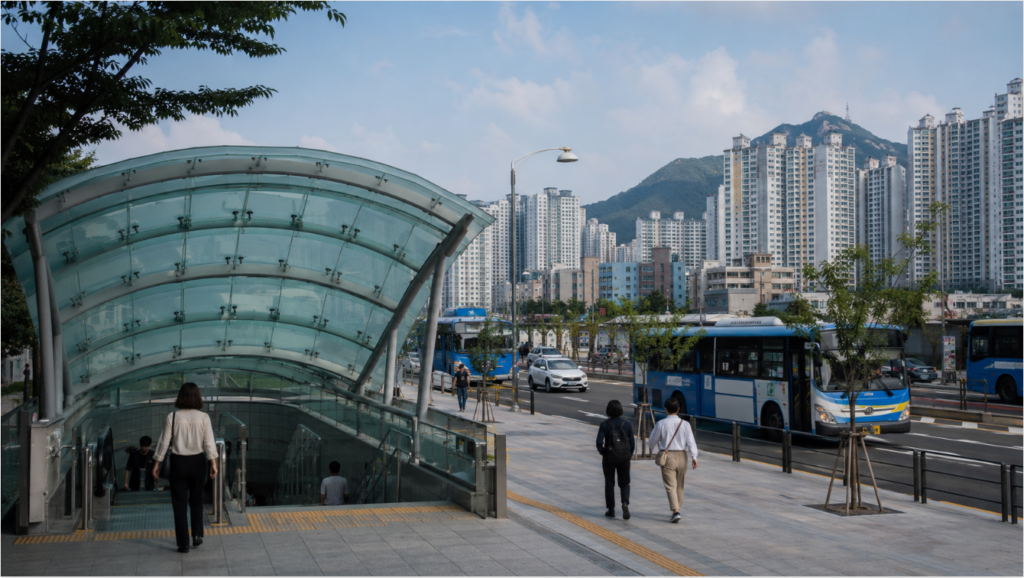
Busan’s transport network is bigger than just the subway.
The main systems you will encounter are:
- Busan Metro Lines 1, 2, 3 and 4
- Busan-Gimhae Light Rail Transit
- Donghae Line
- city buses
- express buses
- village buses
Busan Metropolitan City states that the city’s main Metro network consists of four lines, while the Busan-Gimhae Light Rail and Donghae Line operate as connected rail systems. Metro announcements are provided in Korean, English, Japanese and Chinese.
For everyday life, you do not need to understand the whole network.
Start by learning the line closest to your home.
https://www.busan.go.kr/eng/public-transportation?utm_source=chatgpt.com
2. How to Use the Busan Subway
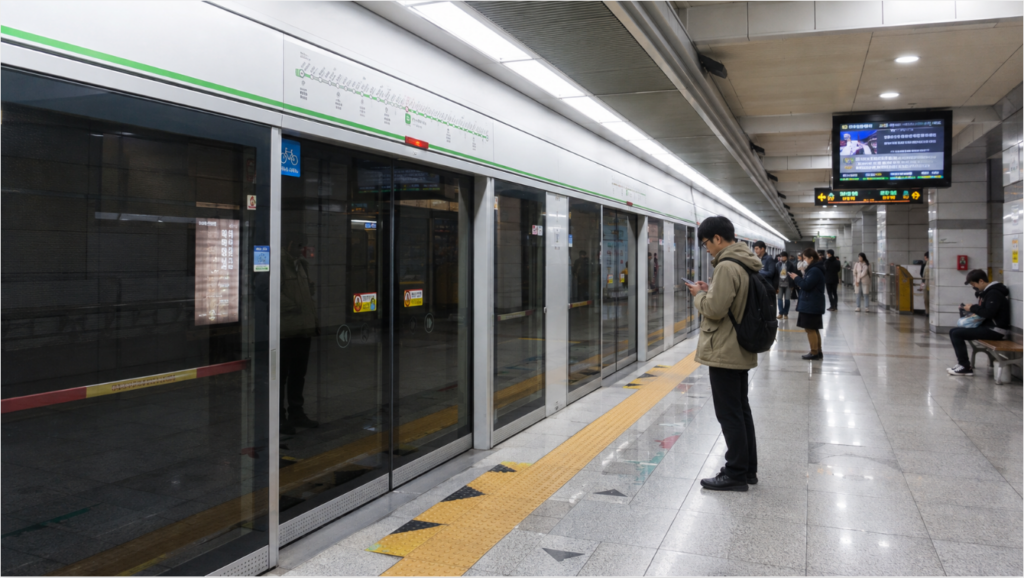
If you are new to Busan, the subway is usually the easiest transportation system to learn.
The basic process is simple:
- Enter the station.
- Find your destination on the route map.
- Check which direction you need to travel.
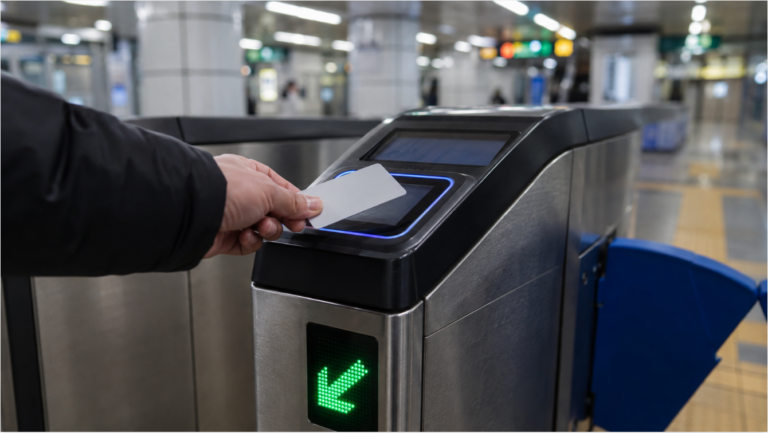
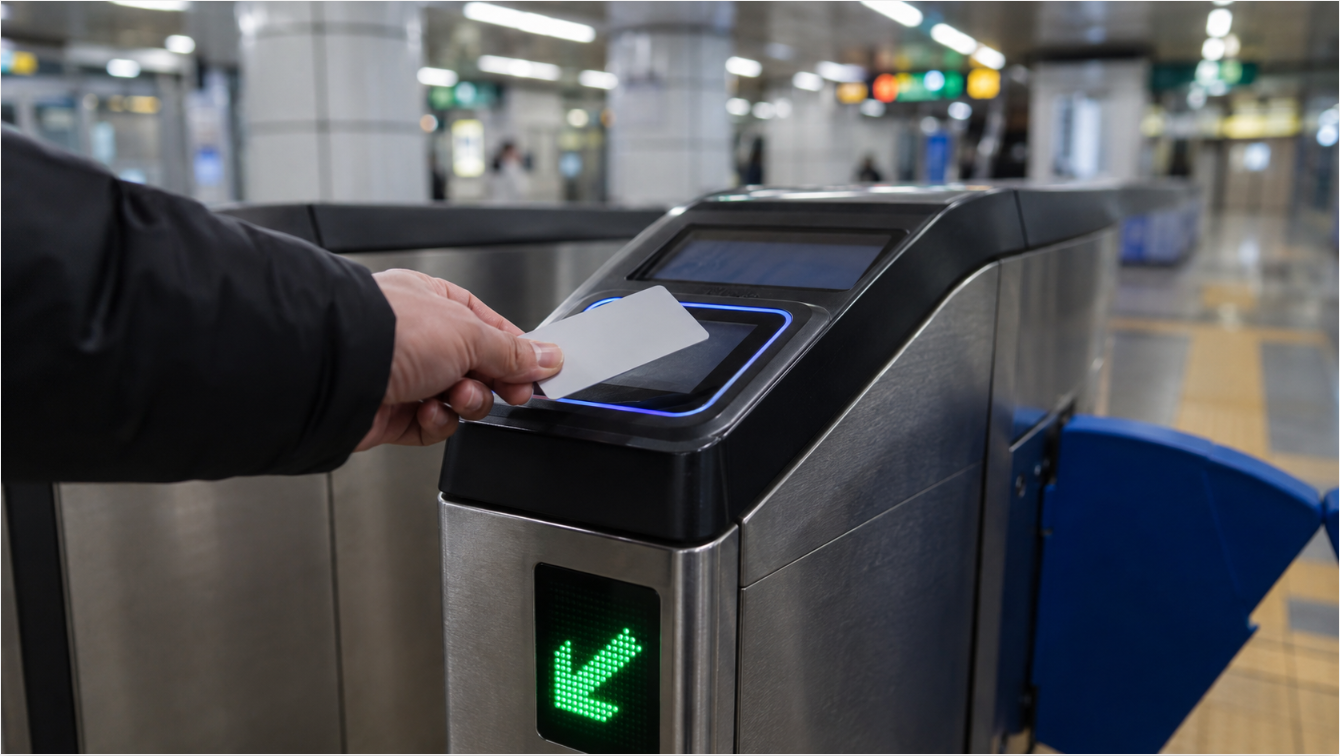
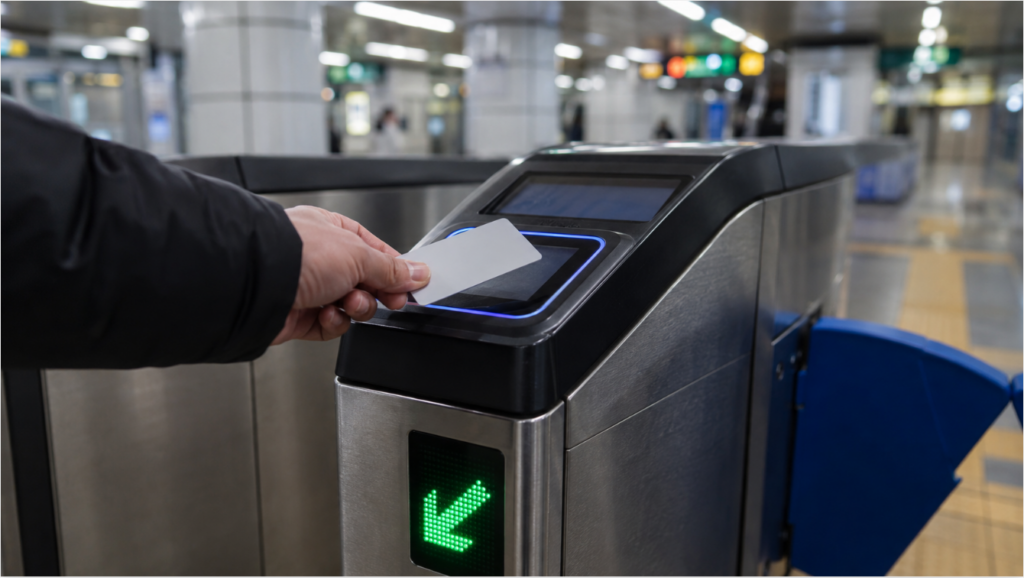
- Tap your transportation card at the gate.
- Follow signs to the correct platform.
- Get off at your destination.
- Tap your card again when leaving.
Busan’s Metro stations and trains use numbered stations, colored lines, and multilingual announcements, so you do not need to read Korean to use the system.
The most important thing: check the direction
Foreigners often find the station easily but take the train in the wrong direction.
Do not look only for:
Line 2
Also check the destination shown for that platform.
For example, Line 2 extends across a large part of Busan and beyond the city, so trains on opposite platforms are traveling in completely different directions.
Learn These Stations First
You do not need to memorize every station.
These are some of the most useful transfer and destination areas for newcomers:
Seomyeon
Lines 1 and 2 meet here.
If you live in Busan, you will probably pass through Seomyeon eventually.
Busan Station
Located on Metro Line 1.
This is where you connect with KTX and other national rail services.
Sasang
Metro Line 2 connects here with the Busan-Gimhae Light Rail Transit.
This makes Sasang particularly useful when traveling to or from Gimhae International Airport.
Suyeong
A useful transfer between Lines 2 and 3 and an important station for people living around the Gwangalli area.
Yeonsan
Lines 1 and 3 meet here.
Once you know these major transfer points, navigating Busan becomes much easier.
3. How Much Does the Busan Subway Cost in 2026?
As of August 2026, the standard adult fare on the Busan Metro is:
- Section 1: KRW 1,600
- Section 2: KRW 1,800
The distance determines whether your trip is charged as Section 1 or Section 2.
There are also subway passes available.
Current Busan Transportation Corporation pricing includes:
- 1-day pass: KRW 6,000
- 3-day pass: KRW 13,000
These passes are useful mainly for people taking the subway repeatedly over a short period. They do not automatically cover every transportation system in Busan; buses, the Donghae Line and Busan-Gimhae Light Rail are excluded from these particular Metro passes.
For someone actually living in Busan, however, a normal transportation card is usually more practical than buying daily subway passes.
https://www.busan.go.kr/eng/bscard?utm_source=chatgpt.com
4. How to Use Buses in Busan
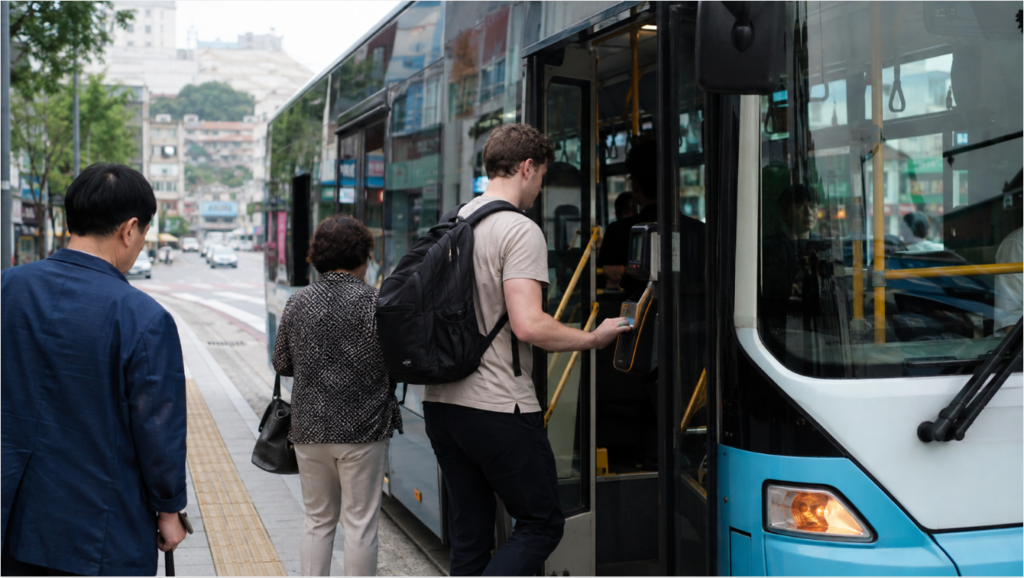
The subway is easy.
The bus is what makes Busan truly accessible.
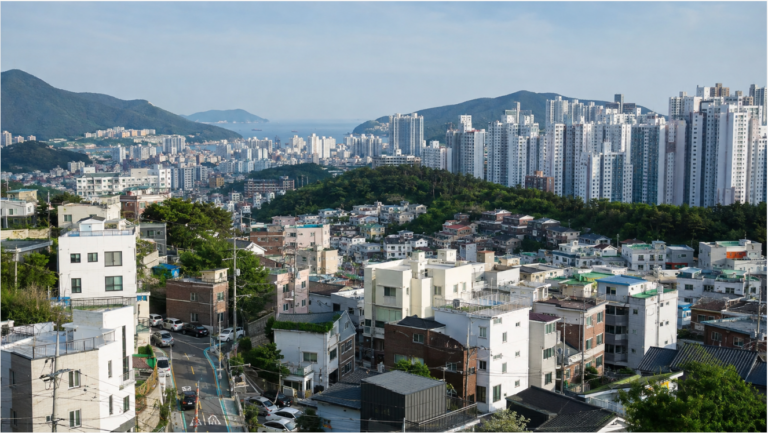
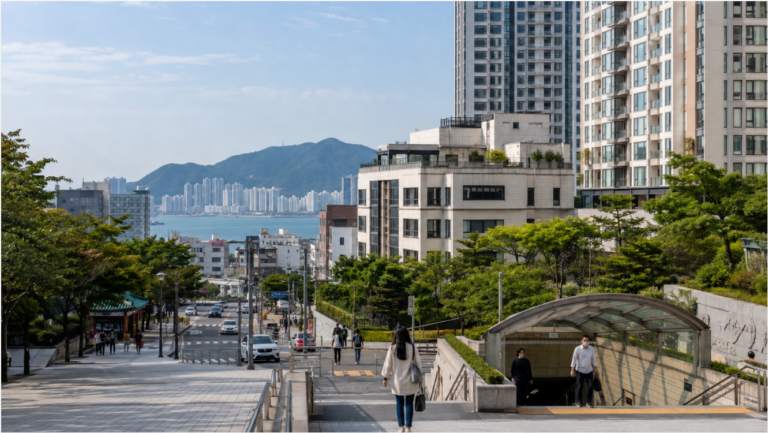
Busan is a mountainous city, and many residential neighborhoods sit on slopes or away from subway stations. Buses fill those gaps. Busan operates regular city buses, express services and smaller neighborhood routes.
To ride:
- Check your bus number.
- Wait at the correct stop.
- Enter through the front door.
- Tap your transportation card.
- Watch your navigation app or the bus display.
- Press the stop button before your stop.
- Leave through the rear door.
Busan’s official guidance says fares can be paid by transportation card or cash, but transportation cards are cheaper and cash users cannot receive transfer discounts.
Current regular city bus fare
For adults:
- Transportation card: KRW 1,550
- Cash: KRW 1,700
Express and night buses cost more.
That is another reason I would recommend buying a transportation card immediately rather than repeatedly paying cash.
5. Which Transportation Card Should You Buy?
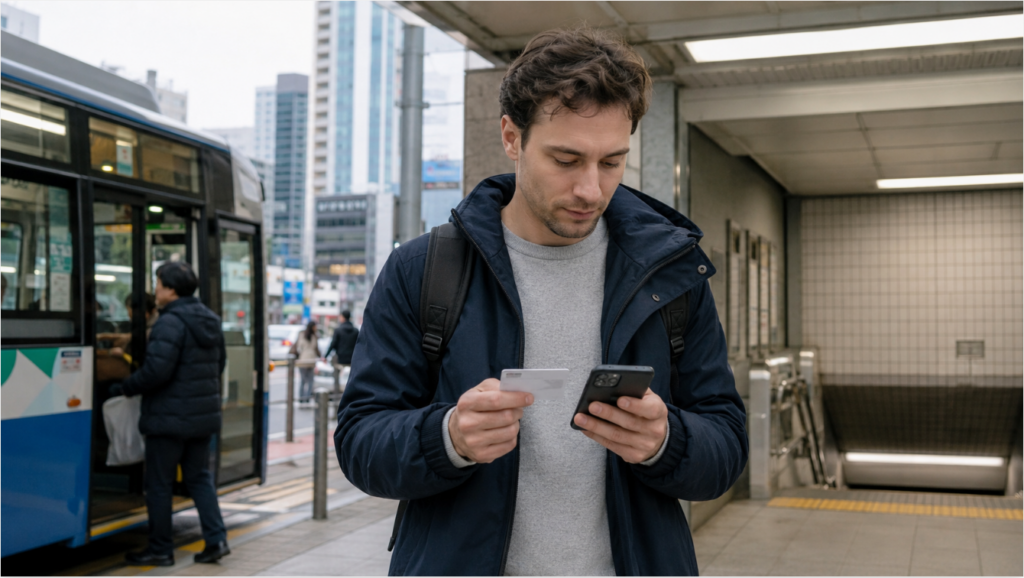
You do not need a Korean credit card just to use public transportation.
Busan supports prepaid transportation cards including Cashbee, Mybi and Busan Hanaro cards. Prepaid cards can be purchased and recharged at locations such as metro stations and convenience stores.
For a newcomer, the brand matters less than having a card you can easily recharge and use on the transport you need.
A prepaid transportation card can cover most basic daily trips.
Keep some balance on the card
Do not wait until you are standing at a bus stop to discover your balance is almost zero.
If Busan becomes your long-term home, keep enough balance for several days of commuting rather than recharging tiny amounts every trip.
https://www.humetro.busan.kr/english/main.do?utm_source=chatgpt.com
6. How Transfers Work in Busan
One of the advantages of using a transportation card is the transfer system.
Busan currently provides transfer discounts when moving between buses and subways within the applicable transfer period. The city’s English guidance states that transfers can be made within 30 minutes, with up to two transfers per journey under the normal system.
Cash passengers do not receive the same transfer discount.
There was also an important regional change in September 2025.
Busan, Gimhae and Yangsan removed the additional intercity transfer surcharge between participating buses, subways and the light rail. The benefit is automatically applied to transportation card users.
This is particularly useful if your daily life extends beyond Busan itself.
For example, some people:
- live in Yangsan and work in Busan
- study in Busan and visit Gimhae
- use Gimhae Airport regularly
The metropolitan transport network increasingly functions as one commuting area.
7. Dongbaek Pass for Foreign Residents
If you live in Busan and use public transportation frequently, this section could save you money.
Busan operates the Prepaid Dongbaek Pass, designed partly for foreign residents and people who cannot easily obtain postpaid transportation cards.
Under the current program, when eligible spending on Busan public transportation exceeds KRW 45,000 in a month, the amount above KRW 45,000 can be refunded the following month, up to a maximum refund of KRW 45,000.
For example:
| Monthly public transport spending | Refund |
|---|---|
| KRW 40,000 | KRW 0 |
| KRW 46,000 | KRW 1,000 |
| KRW 70,000 | KRW 25,000 |
| KRW 90,000 | KRW 45,000 |
| KRW 100,000 | KRW 45,000 |
The program currently covers Busan city buses, village buses, urban rail, light rail and the Donghae Line, with some exclusions.
Can foreigners get the Dongbaek Pass?
Yes, but foreign residents need a foreign registration card to receive the Dongbaekjeon Prepaid Transportation Card.
Foreign residents with a smartphone registered in their own name can apply through the Dongbaekjeon app or visit a Busan Bank branch. Other cases may require an in-person Busan Bank visit.
For someone visiting Busan for a week, this is unnecessary.
For someone commuting to work or university every day, it is worth checking.
8. Getting from Gimhae Airport into Busan
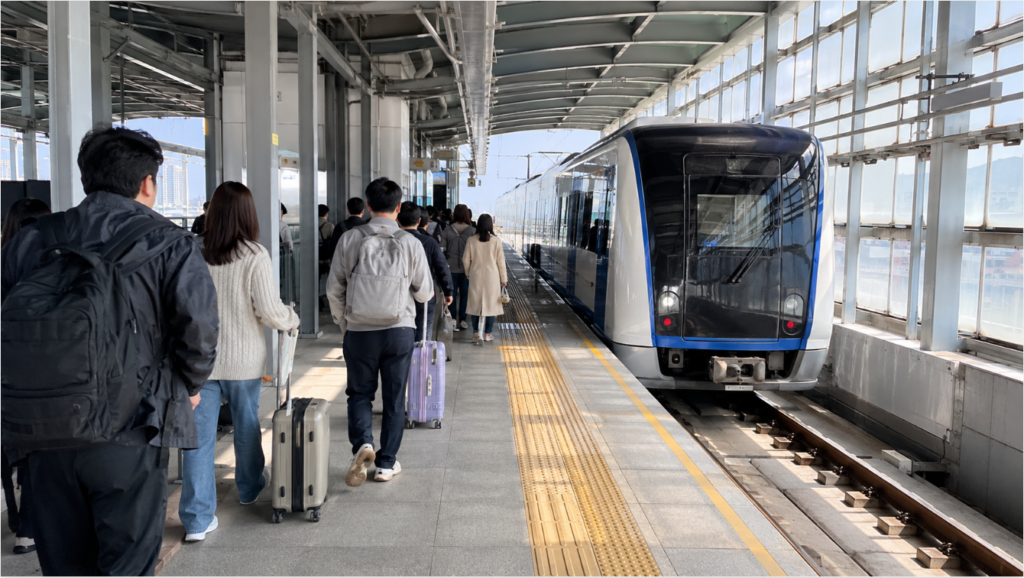
One confusing thing for first-time visitors is that Gimhae International Airport is not directly on a normal Busan Metro line.
Instead, the airport has a station on the Busan-Gimhae Light Rail Transit.
A common route into central Busan is:
Gimhae International Airport
→ Busan-Gimhae Light Rail
→ Sasang
→ Metro Line 2
Sasang connects the light rail with Busan Metro Line 2.
Depending on where you live, you can also connect through Daejeo to Line 3.
If you are carrying several suitcases
Public transportation is inexpensive, but it is not automatically the best choice.
If you arrive after a long flight with:
- two large suitcases
- children
- a stroller
- heavy luggage
a taxi or airport limousine may be more comfortable for your first trip.
After you settle in, the light rail becomes much easier to use.
9. Busan Has Free Public Transportation for Children Aged 6–12
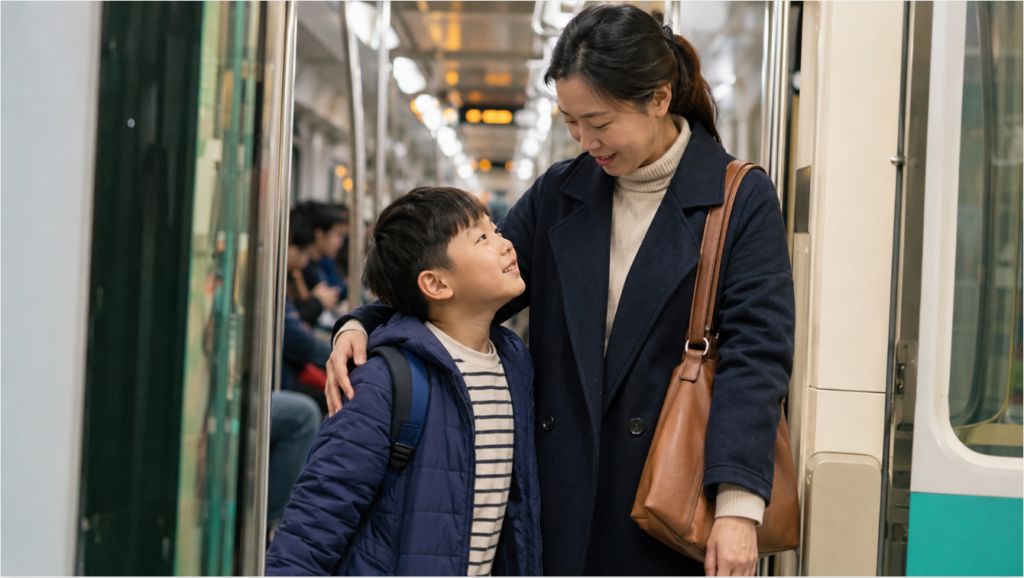
This is particularly useful for foreign families living in Busan.
Busan provides free public transportation for children aged 6 to 12, and the program applies regardless of nationality.
The child needs a registered children’s transportation card with the date of birth registered.
The current program covers Busan city and village buses and the subway, with specified exclusions including the Donghae Line and Route 2000. Paying cash does not receive the same free-fare treatment.
So if you move to Busan with a school-age child, do not simply give them an adult transportation card.
Set up the correct children’s card.
https://www.busan.go.kr/eng/free-public-transportation-for-children?utm_source=chatgpt.com
10. Common Transportation Mistakes in Busan
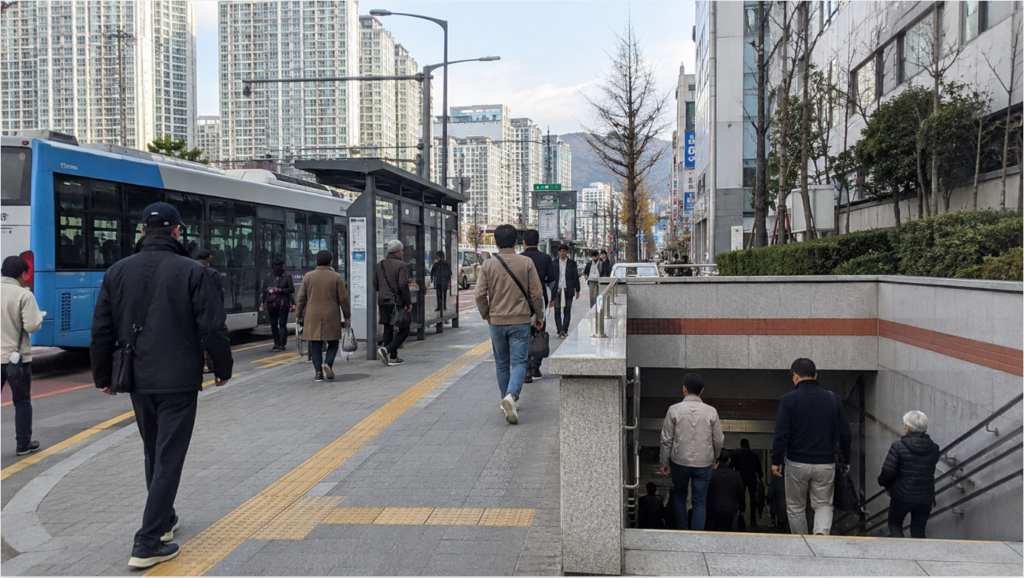
Mistake 1: Using only the subway
The subway is convenient, but Busan is not Seoul.
Many useful places are much easier to reach by bus.
Once you become comfortable with buses, the usable size of the city increases dramatically.
Mistake 2: Choosing a route only by travel time
A navigation app may show:
42 minutes
for two different routes.
But one may involve:
- three transfers
- a long uphill walk
- an eight-minute wait
while the other is one direct bus.
For everyday commuting, fewer transfers are often more valuable than saving three minutes.
Mistake 3: Paying cash
Cash still works on many buses, but transportation cards are cheaper and are necessary to receive normal transfer discounts.
Unless you have a specific reason, use a card.
Mistake 4: Ignoring subway exit numbers
Large stations can have many exits.
Getting off at the correct station but leaving through the wrong exit can add a surprisingly long walk.
Always check:
Station + Exit Number
not just the station name.
Mistake 5: Assuming the last train is at the same time everywhere
Busan’s rail services generally operate from around 5 a.m. until around midnight, but first and last train times differ by station and service.
If you are traveling late at night, check your actual route before leaving.
Frequently Asked Questions
Is Busan easy to travel around without a car?
For many people, yes.
Busan has four main Metro lines plus buses, the Busan-Gimhae Light Rail and the Donghae Line. The best experience usually comes from combining subway and bus travel rather than relying on only one system.
Your neighborhood still matters. Living close to a useful subway station or direct bus route can make daily life considerably easier.
How much is the Busan subway in 2026?
The standard adult Busan Metro fare is currently KRW 1,600 for Section 1 and KRW 1,800 for Section 2.
How much is a bus in Busan?
The current adult regular city bus fare is KRW 1,550 using a transportation card or KRW 1,700 in cash. Express and night buses have different fares.
Where can I buy a transportation card in Busan?
Prepaid transportation cards can be purchased at locations including metro stations, stores and convenience stores. They can also be recharged at metro stations, convenience stores and other designated charging locations.
Can foreigners use Dongbaek Pass?
Yes.
Foreign residents with a foreign registration card can obtain the Dongbaekjeon Prepaid Transportation Card and enroll in the Prepaid Dongbaek Pass under the current program conditions.
Is public transportation free for foreign children in Busan?
Children aged 6–12 can currently receive free fares on covered Busan public transportation regardless of nationality when using a properly registered children’s transportation card.
Final Thoughts
The Busan Public Transportation Guide can really be reduced to three rules.
Get a transportation card.
Learn the subway line closest to your home.
Do not be afraid to use buses.
The subway will help you understand the shape of Busan, but buses are what connect you to the neighborhoods where people actually live.
If you stay in Busan long enough to commute regularly, check whether the Dongbaek Pass can reduce your monthly transportation costs.
And after a few weeks, you probably will not think about any of this.
You will simply tap your card, change trains at Seomyeon, catch a bus up a hill, and get home.
That is usually the moment Busan starts to feel like a city you live in rather than a city you are visiting.
https://easykorealife.com/wp-admin
About the Author