What Foreigners Should Know About Busan Recycling Rules
A friendly, step-by-step guide for foreigners living in Busan
If you are living in Busan, one of the first everyday systems that can confuse you is Busan recycling rules.
Most foreigners I meet don’t think recycling will be a problem—until one morning, they find their trash still sitting there with a sticker attached.
This is very common.
And no, it doesn’t mean you did something “wrong” on purpose.
It simply means you are still learning how recycling works in Busan.
I’ll explain this slowly and clearly, the way a local neighbor would.
Recycling in Busan Is Strict — but Logical

In many countries, recycling is flexible.
You can mix things, or rules are not enforced strongly.
Busan is different.
Here, recycling is:
- Required by law
- Checked regularly
- Enforced even for foreigners
If trash is not sorted correctly, it may:
- Not be collected
- Get a warning sticker
- Lead to a fine later
Once you understand the system, it actually becomes very routine.
The Moment Most Foreigners Get Confused
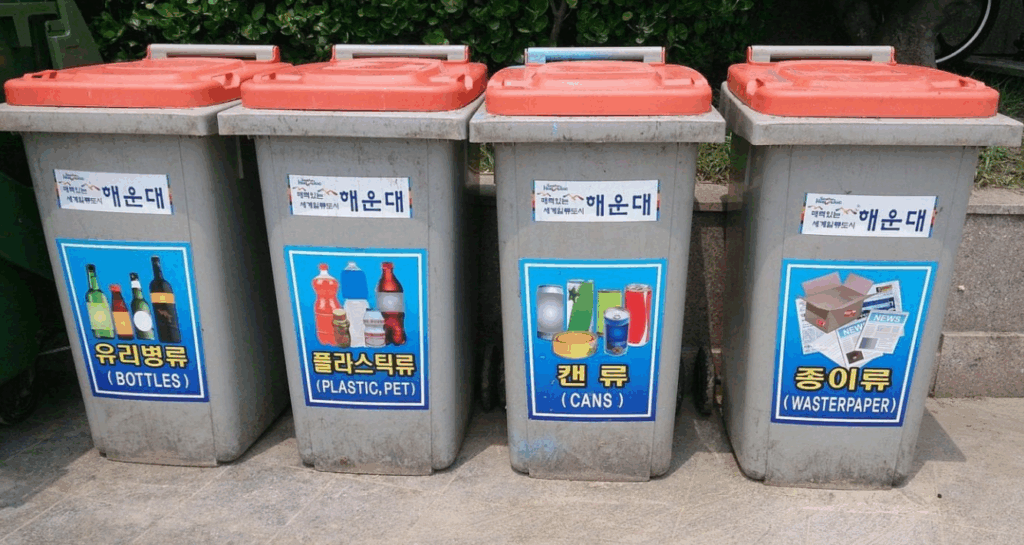
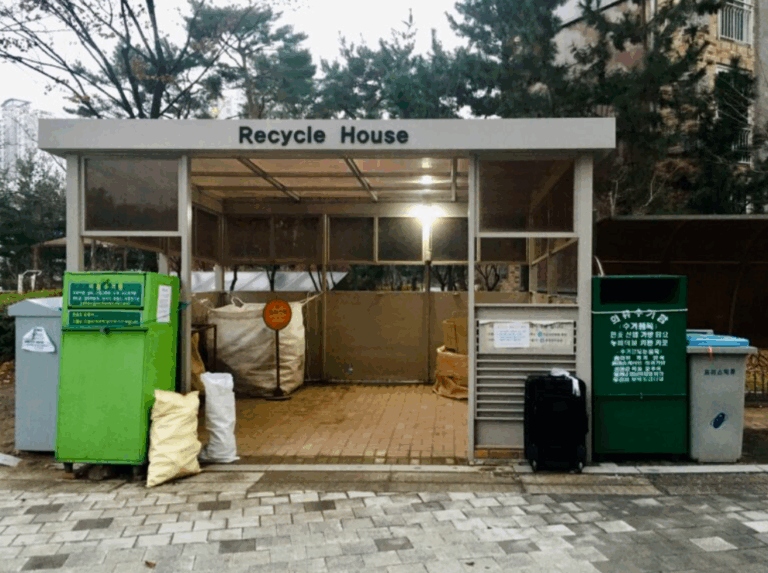
This situation happens a lot in Busan apartments.
You move in.
You take your trash out at night.
The next morning, everyone else’s trash is gone—only yours is still there.
This usually means one thing:
Your trash didn’t follow Busan recycling rules.
Let’s break down the parts that cause the most confusion.
Food Waste: The Biggest Trap
Food waste recycling in Busan is strict and very specific.
What counts as food waste in Busan?
- Rice, noodles, bread
- Vegetables and fruit flesh
- Leftover side dishes
What does NOT count as food waste?
This surprises many foreigners:
- Bones
- Eggshells
- Shells (clam, crab, oyster)
- Fruit pits (avocado, peach, mango)
- Tea bags and coffee grounds
These go into general trash, not food waste.
Many Busan apartments use RFID food waste bins.
If you put the wrong items inside, the lid may not open—or the system may record a violation.
General Trash: You Must Use Official Bags
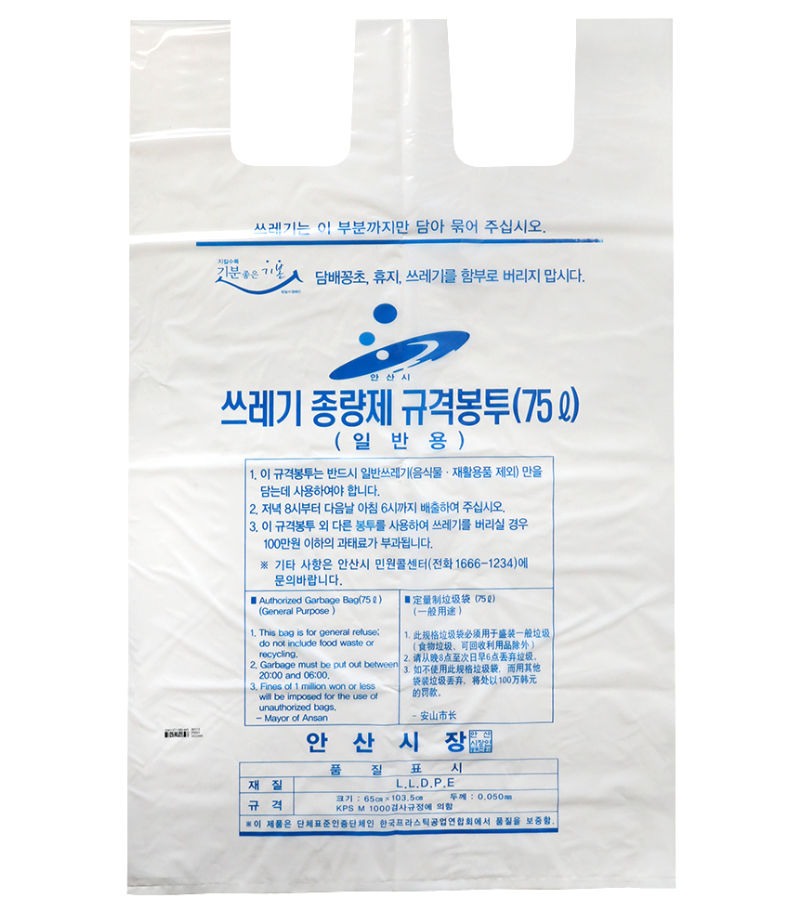
In Busan, you cannot use random trash bags.
You must buy official district trash bags (종량제 봉투) from:
- Convenience stores
- Supermarkets
Each district in Busan uses its own bags.
If you use the wrong one, your trash may not be collected.
This rule is one of the most important parts of Busan recycling rules.
Plastic Recycling: Clean Matters Here
Plastic recycling in Busan is very detail-focused.
Before throwing plastic away:
- Empty it
- Rinse it lightly
- Remove labels if possible
Dirty plastic is treated as regular trash.
In some countries, this level of cleaning is optional.
In Busan, it is expected.
Paper, Glass, and Cans — Small Details Count
Paper
- Must be clean
- No food stains
- No plastic coating (many coffee cups are not paper)
Glass
- Bottles and jars only
- Remove caps
- Broken glass goes into general trash, wrapped safely
Cans
- Rinse before recycling
- No food left inside
Trash Timing Is Also Important
Another common mistake foreigners make in Busan is timing.
In many neighborhoods:
- Trash can only be taken out in the evening
- Only on certain days
If trash is left out too early or too late, it may stay there.
Check the signs near your apartment’s recycling area.
Each building in Busan may have slightly different rules.
Apartment Rules Come First
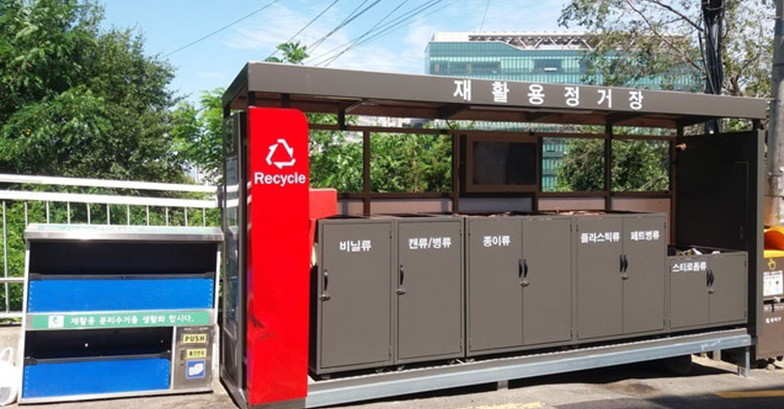
Even though Busan recycling rules follow national systems, apartments often add their own instructions.
Always follow:
- Signs in your building
- Instructions from the management office
If you are unsure, asking the manager is completely normal.
Why Busan Is So Strict About Recycling
Busan is a large coastal city with limited landfill space.
Recycling reduces waste, cost, and environmental damage.
That is why:
- Rules are clear
- Enforcement is consistent
- Exceptions are rare
It’s not personal—it’s simply how daily life works here.
A Few Friendly Tips
- Separate trash at home with small containers
- Use a translation app for recycling signs
- If unsure, don’t guess—ask
- Almost everyone makes a mistake once
Once you understand Busan recycling rules, daily life becomes much easier and far less stressful.
Final Thoughts
Learning Busan recycling rules is part of settling into life in Busan.
It may feel strict at first, but it quickly becomes a habit.
When you know how trash, food waste, and recycling work,
you avoid fines, confusion, and awkward moments—and Busan starts to feel much more like home.
Easy Korea Life is here to help you learn, adapt, and feel at home—one local insight at a time.
https://www.busan.go.kr/depart/ahwastepolicy09
https://easykorealife.com/wp-admin
About the Author