Last updated: August 2026
Information checked: August 2026
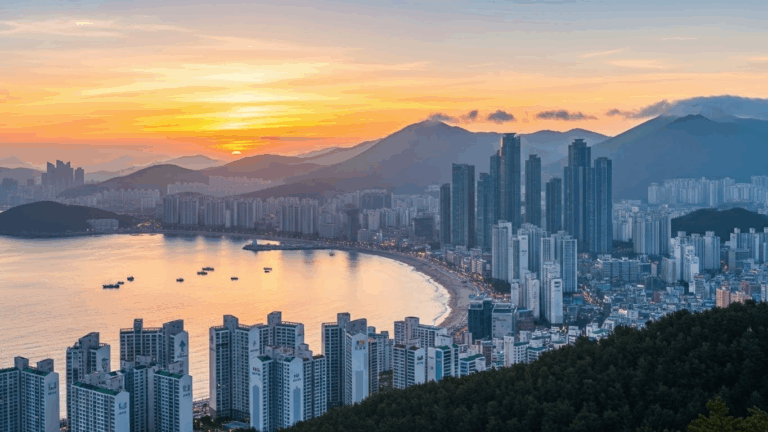
Choosing among the Best Areas to Live in Busan is not simply a matter of picking the neighborhood closest to the beach.
Busan is spread across the coast, rivers, and mountains, so two neighborhoods that look close on a map can offer very different commuting times, housing options, and daily routines. The best choice depends on whether you are moving for work, studying, raising children, or planning to live without a car.
This guide compares seven of the Best Areas to Live in Busan for foreigners based on transportation, housing costs, daily convenience, atmosphere, and the type of resident each neighborhood suits best.
Quick Answer: Where Is the Best Place to Live in Busan?
There is no single neighborhood that is best for everyone.
- Haeundae and Jangsan are best for families and newcomers who want modern residential facilities.
- Gwangalli and Namcheon suit people who want coastal life with a more local atmosphere.
- Centum City is convenient for professionals who prefer modern high-rise living.
- Seomyeon and Jeonpo are the strongest choices for people living without a car.
- Kyungsung University and Pukyong National University are practical for students and younger residents.
- Dongnae and Oncheon suit long-term residents who want a quieter and more traditional residential area.
- Nampo and Jungang work well for people employed near Busan Station, the port, Jung-gu, or Yeongdo.
For someone moving to Busan without knowing the city well, Seomyeon is usually the safest practical choice. For coastal quality of life, Gwangalli is often easier to live in long-term than the busiest part of Haeundae.
Table of Contents
- Best Areas to Live in Busan: Quick Comparison
- Haeundae and Jangsan
- Gwangalli and Namcheon
- Centum City
- Seomyeon and Jeonpo
- Kyungsung University and Pukyong National University
- Dongnae and Oncheon
- Nampo and Jungang
- How to Choose the Right Neighborhood
- Frequently Asked Questions
Best Areas to Live in Busan: Quick Comparison
| Neighborhood | Best for | Public transport | Relative rent | Main drawback |
|---|---|---|---|---|
| Haeundae and Jangsan | Families, corporate workers, newcomers | Very good | Medium-high to high | Long commute to western Busan |
| Gwangalli and Namcheon | Young professionals, remote workers, coastal lifestyle | Good | Medium-high | Weekend traffic and noise |
| Centum City | Professionals, modern high-rise living | Very good | High | Less local neighborhood atmosphere |
| Seomyeon and Jeonpo | Car-free living, central commuting | Excellent | Medium | Crowded and noisy |
| Kyungsung–Pukyong area | Students, younger residents | Very good | Low to medium | Smaller and older housing |
| Dongnae and Oncheon | Families, long-term residents | Good | Low to medium | Farther from major beaches |
| Nampo and Jungang | Port workers, old downtown lifestyle | Good | Medium | Fewer modern residential buildings |
The rent levels above are relative comparisons rather than official averages. Current listings checked in August 2026 show that small rooms in Daeyeon and Dongnae can begin in the high KRW 200,000s or KRW 300,000s, while many compact units in Seomyeon, Gwangalli, and Haeundae fall around KRW 400,000–750,000 per month. Deposits, building age, room size, proximity to a station, and ocean views can change the price significantly.
1. Haeundae and Jangsan: Best for Families and First-Time Foreign Residents
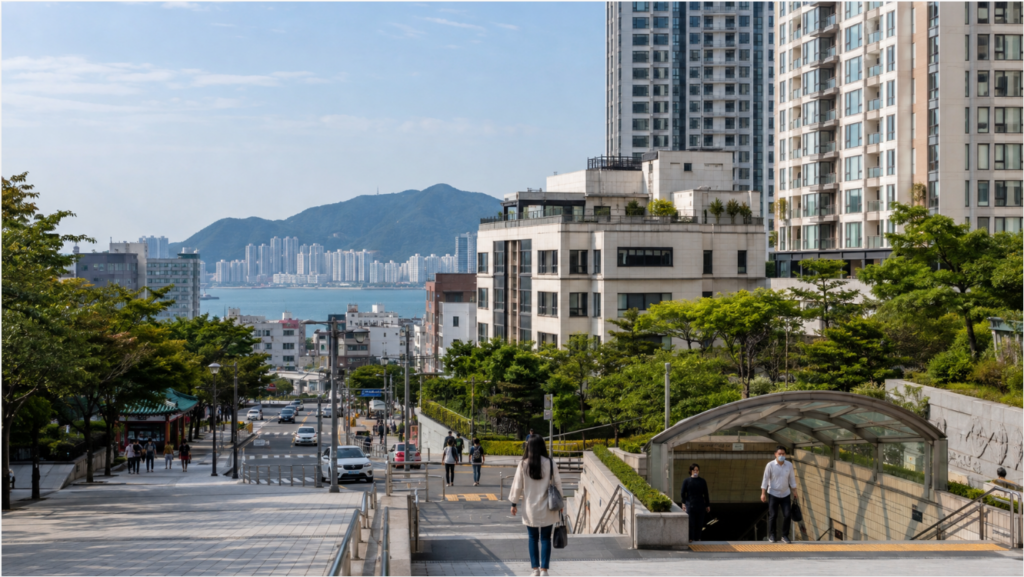
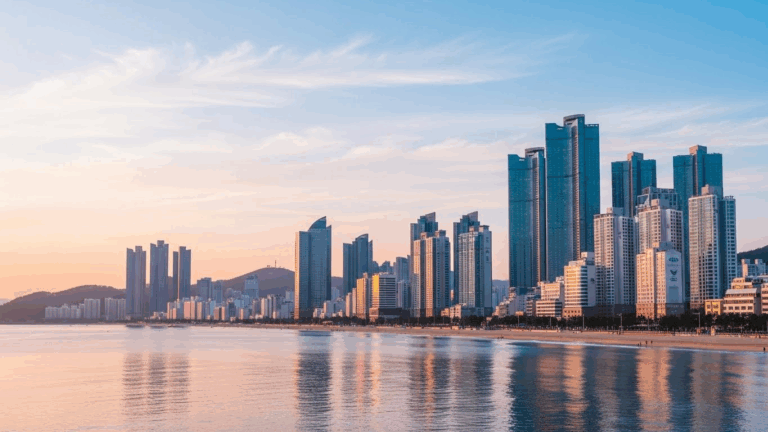
Haeundae is one of the first areas foreigners consider when deciding where to live in Busan. It offers beaches, restaurants, medical facilities, shopping, international hotels, and access to Busan Metro Line 2.
However, living directly beside Haeundae Beach and living around Jangsan Station are different experiences.
The beach area is active, tourist-oriented, and more expensive. Jangsan and Haeundae New Town feel more residential, with larger apartment complexes, supermarkets, schools, clinics, and services used by local families.
Official Busan guides place Haeundae Beach, the aquarium, Dongbaek Coastal Trail, museums, and cultural facilities within the wider Haeundae area, giving residents easy access to both leisure and practical city infrastructure.
Recent compact-officetel transactions and listings around Jwa-dong include monthly rents from roughly KRW 420,000 to KRW 750,000 with different deposit structures. Larger, newer, or ocean-view properties can cost substantially more.
Haeundae and Jangsan are best for:
- Families with children
- Corporate employees working in eastern Busan
- New foreign residents who want familiar amenities
- People who want regular access to the beach
- Residents who prefer apartment complexes over older low-rise housing
Think twice if:
You work near Busan Station, Nampo, Sasang, or western Busan. The cross-city commute can become tiring even when your home is close to Line 2.
2. Gwangalli and Namcheon: Best for Coastal Lifestyle and Local City Life
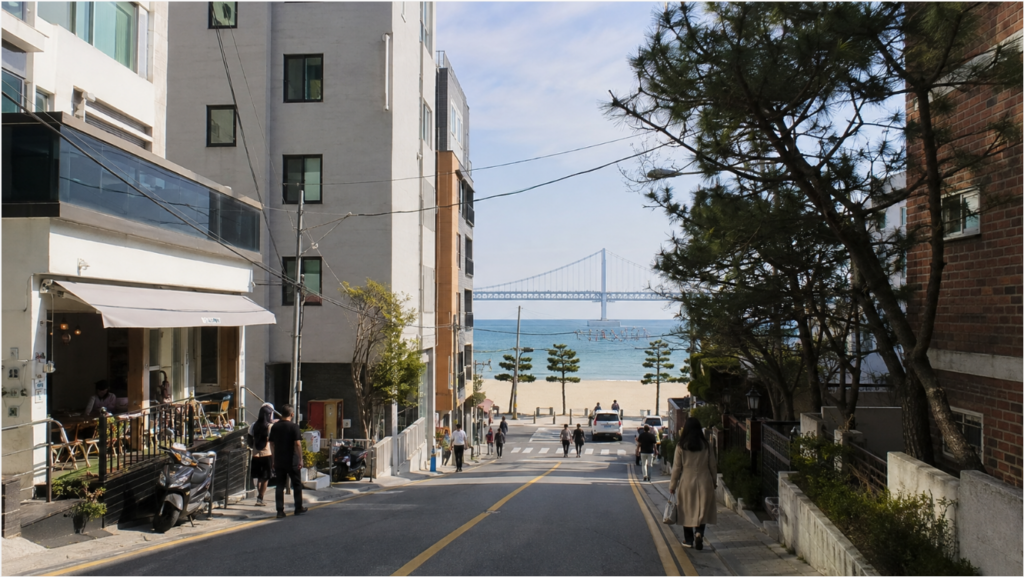
Gwangalli combines beach access with a more local residential atmosphere than central Haeundae.
The beachfront has cafés, restaurants, bars, and views of Gwangan Bridge, while streets farther inland contain ordinary apartment buildings, small supermarkets, clinics, schools, and neighborhood restaurants. Visit Busan describes Gwangalli as one of the city’s two best-known beaches and highlights Gwangan Bridge as its major landmark.
This area works particularly well for people who enjoy walking, running, working from cafés, or meeting friends near the coast.
Gwangalli is served by Busan Metro Line 2 through Gwangan and Geumnyeonsan stations. However, some beachfront housing is not directly beside a subway exit, so check the actual walking distance before signing a lease.
Recent small-room examples in Gwangalli have appeared around KRW 430,000–600,000 per month, although newer buildings, larger rooms, and homes close to the water can be more expensive.
Gwangalli and Namcheon are best for:
- Young professionals
- Remote workers
- Couples
- Residents who want beach access without living in a hotel district
- People working in Suyeong, Nam-gu, Centum, or eastern Busan
Think twice if:
Your apartment faces a busy road or nightlife street. Weekend noise, parking congestion, humidity, and aging buildings can make two homes in the same neighborhood feel completely different.
Among the Best Areas to Live in Busan, Gwangalli is one of the strongest choices for balancing daily convenience with coastal lifestyle.
3. Centum City: Best for Modern Convenience and Professional Life
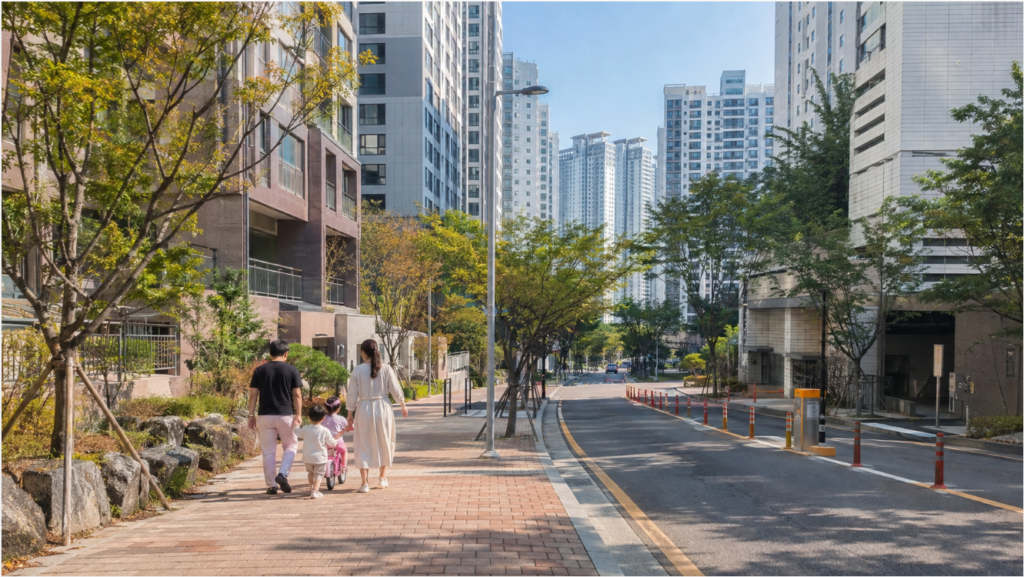
Centum City is a modern business, shopping, and residential district in Haeundae-gu.
The area contains high-rise offices, residential towers, major retail facilities, cultural venues, and convention infrastructure. Centum City Station is on Busan Metro Line 2, and major shopping facilities are connected directly or through short underground walkways.
Centum is convenient for people working near BEXCO, Marine City, Suyeong, or Haeundae. The streets around the station are organized and relatively easy to navigate, and many daily needs can be handled without traveling far.
The trade-off is cost. Centum has fewer inexpensive one-room buildings than university areas or older parts of Busan. Larger residential towers and newer officetels can be among the city’s more expensive rental options. Current transactions also show a very wide gap between small units and premium large properties.
Centum City is best for:
- Professionals working in eastern Busan
- Corporate expatriates
- Residents who prefer new buildings
- People who value shopping and indoor convenience
- Anyone who wants quick access to Line 2
Think twice if:
You want a traditional neighborhood, inexpensive local housing, or lively street culture. Centum is convenient, but it can feel more commercial than residential.
4. Seomyeon and Jeonpo: Best for Living in Busan Without a Car
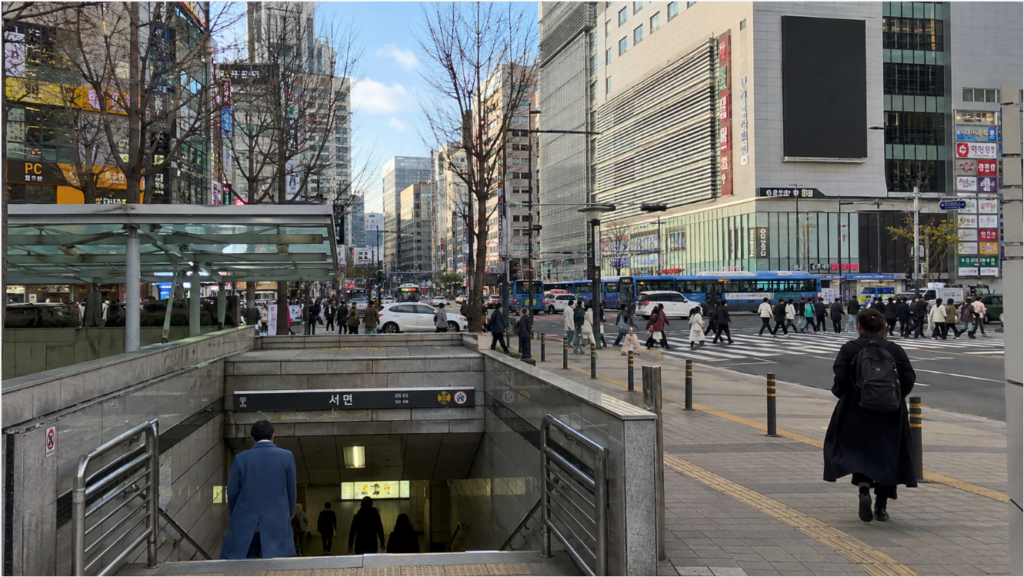
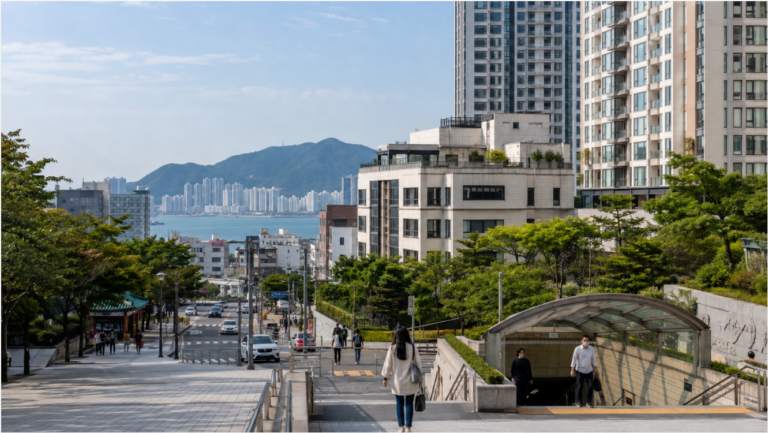
Seomyeon is the most practical central base for many newcomers.
Seomyeon Station connects Busan Metro Lines 1 and 2, allowing direct travel toward Haeundae, Gwangalli, Nampo, Busan Station, Dongnae, and other major areas. Visit Busan describes Seomyeon as the city’s largest downtown area, with shopping, food, entertainment, and access through both metro lines.
Jeonpo, located next to Seomyeon, has a more relaxed atmosphere with cafés, restaurants, workshops, and converted commercial alleys. The official city guide also identifies Jeonpo as a mixed area where older markets, local restaurants, and newer businesses operate close together.
Current small-officetel examples around Seomyeon commonly appear around KRW 450,000–650,000 per month, depending on the deposit and building.
Seomyeon and Jeonpo are best for:
- People living without a car
- First-time residents unsure where they will work
- Young professionals
- Residents who travel around the city frequently
- People who value restaurants, shopping, and nightlife
Think twice if:
You need quiet streets, easy parking, or a large family apartment. Seomyeon can remain busy late into the night.
For pure transportation convenience, Seomyeon is one of the Best Areas to Live in Busan.
5. Kyungsung University and Pukyong National University: Best for Students
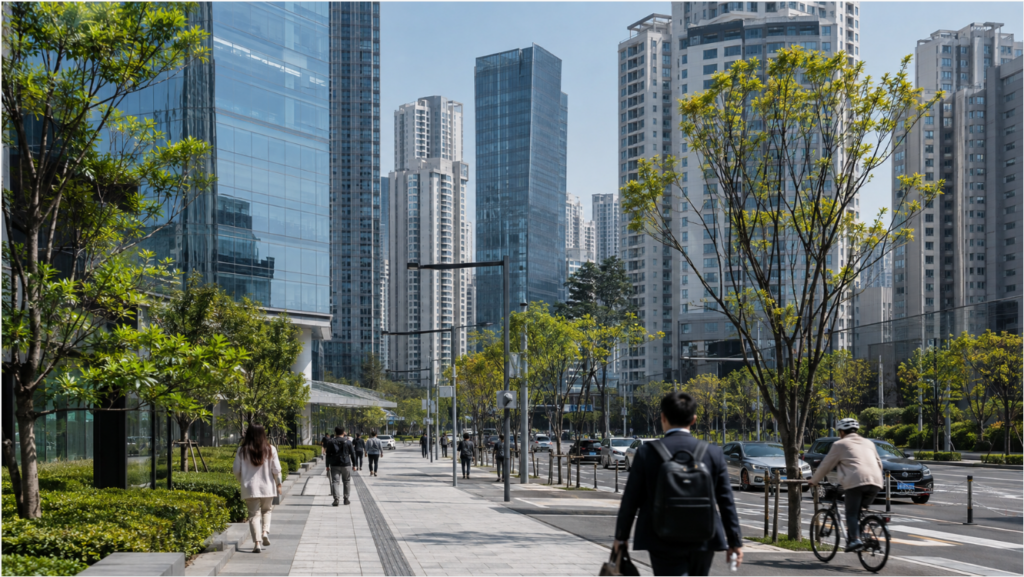
The area around Kyungsung University and Pukyong National University is one of Busan’s major student districts.
It sits on Metro Line 2 and has affordable restaurants, cafés, bars, convenience stores, gyms, and small rental rooms. Visit Busan describes the streets between the two universities as a youth-oriented area with cafés, restaurants, pubs, and weekend cultural activity.
Because many properties target students, deposits and monthly rents can be lower than in Haeundae, Centum, or the Gwangalli beachfront area.
Recent small-room listings in Daeyeon-dong have included monthly rents from the high KRW 200,000s to around KRW 500,000, but room size, management fees, deposit, age, and condition vary considerably.
The university area is best for:
- International students
- Language students
- Younger residents
- People looking for lower-cost one-room housing
- Residents who want access to both Seomyeon and Gwangalli
Think twice if:
You need a large modern apartment or dislike nightlife. Many units are compact, and some buildings are older than their online photos suggest.
6. Dongnae and Oncheon: Best for Quiet Long-Term Living
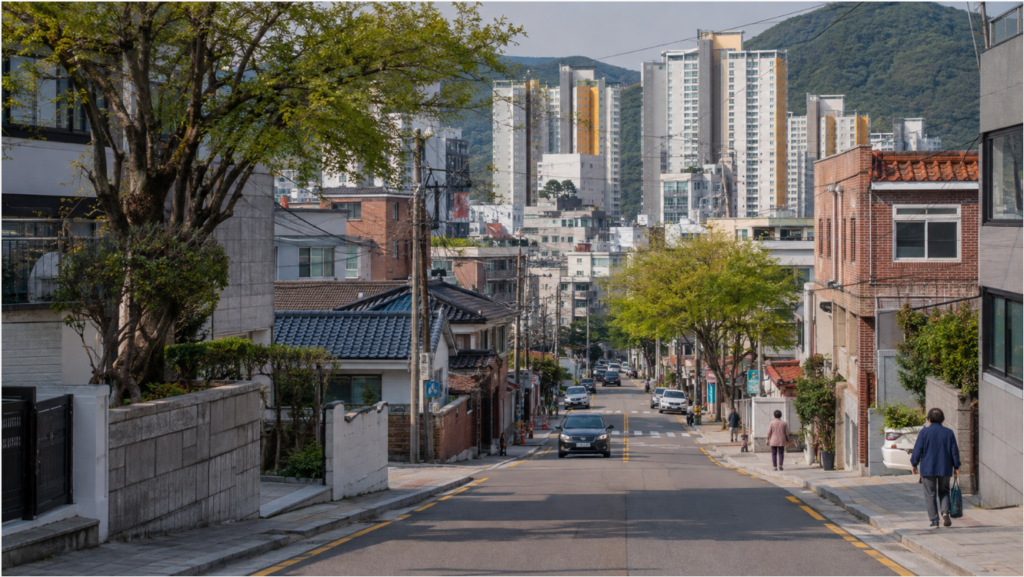
Dongnae and Oncheon offer a more traditional residential experience.
These areas are less internationally visible than Haeundae or Seomyeon, but they have established markets, hospitals, schools, apartment complexes, restaurants, and practical neighborhood services.
Dongnae works well for people who want more space, quieter streets, and access to northern or central Busan. It can also suit families who do not need to live close to the beach.
Recent examples in Dongnae show smaller homes and older units around KRW 300,000–600,000 per month, depending heavily on deposit size, room condition, and distance from transit.
Dongnae and Oncheon are best for:
- Long-term residents
- Families
- Residents who prefer local neighborhoods
- People working in Dongnae, Yeonje, Geumjeong, or northern Busan
- Anyone prioritizing housing value over ocean views
Think twice if:
You expect extensive English signage or want to walk to the beach. Daily life may require more Korean than in major tourist districts.
7. Nampo and Jungang: Best for Old Downtown and Port Access
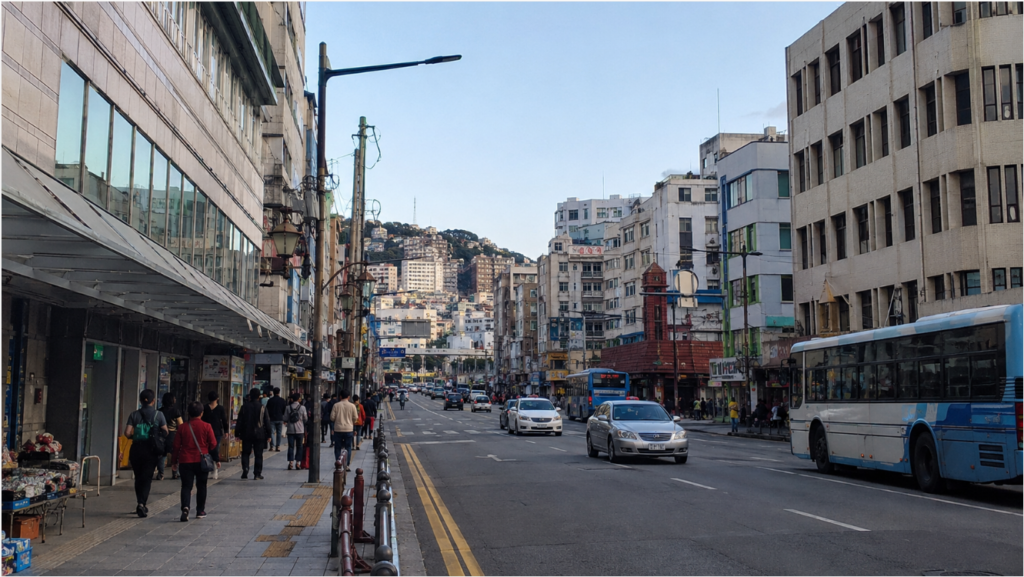
Nampo and Jungang form part of Busan’s older downtown area.
The neighborhoods are close to markets, shopping streets, the port, Busan Station, Yongdusan Park, and ferry-related infrastructure. Nampo and Seomyeon are both recognized by the city as major downtown activity areas.
This location can be convenient for people working in Jung-gu, Dong-gu, Yeongdo, or near the port. Metro Line 1 also provides direct access to Busan Station, Seomyeon, and Dongnae.
Nampo offers a more historic and compact city atmosphere than Centum or Haeundae. However, the supply of modern residential towers is more limited, and nearby hillside neighborhoods can involve steep walking routes.
Nampo and Jungang are best for:
- People working near Busan Port
- Residents commuting through Busan Station
- People who enjoy traditional markets and old downtown streets
- Residents interested in Yeongdo and western Busan
- People who mainly use Metro Line 1
Think twice if:
You want new apartment complexes, coastal resort facilities, or easy access to eastern Busan.
How to Choose Between the Best Areas to Live in Busan
Do not choose a neighborhood based only on photos or the district name.
Before signing a lease, check the following:
Test the real commute
Travel from the apartment to your workplace or university during the morning or evening rush hour. A route that looks short on a map may require a bus transfer, a steep walk, or a crowded interchange.
Check the walking route from the station
“Five minutes from the subway” may refer to a fast walk without traffic lights or hills. Walk the actual route yourself.
Visit once during the day and once at night
A quiet street in the afternoon may become a nightlife area after 10 p.m. The reverse is also possible: an active commercial area may become empty and uncomfortable late at night.
Ask about management fees
Monthly rent does not always include electricity, gas, water, internet, parking, or building management fees.
Inspect humidity and mold
This is especially important near the coast. Check window frames, wallpaper corners, bathroom ventilation, and the area behind large furniture.
Compare the deposit, not only the monthly rent
A low monthly payment may require a much larger refundable deposit. Before transferring money, confirm the contract, ownership record, registered address, and deposit-protection options.
Which Busan Neighborhood Is Best for You?
Here is the simplest decision guide.
- Best overall for a first-time resident: Seomyeon
- Best for beach lifestyle: Gwangalli
- Best for families: Haeundae or Jangsan
- Best for modern professional living: Centum City
- Best for international students: Kyungsung–Pukyong area
- Best for quieter long-term living: Dongnae
- Best for port and Busan Station access: Nampo or Jungang
- Best for living without a car: Seomyeon
The Best Areas to Live in Busan depend less on which neighborhood is most famous and more on where you need to travel every day.
Frequently Asked Questions
What is the best area in Busan for foreigners?
Seomyeon is the most practical general choice because it connects Metro Lines 1 and 2 and provides easy access to most parts of the city. Haeundae and Gwangalli may be better for foreigners who prioritize coastal lifestyle.
Is Haeundae the best place to live in Busan?
Haeundae is a strong choice for families, corporate workers, and newcomers, but it is not ideal for everyone. Rent can be higher, and commuting to western or old downtown Busan can take longer.
Where is the cheapest place to live in Busan?
University neighborhoods, older parts of Dongnae, and residential areas farther from the beach generally provide more lower-cost options. The final cost depends on the deposit, room size, building age, and management fee.
Can foreigners live in Busan without a car?
Yes. Seomyeon, Jeonpo, Gwangalli, Centum City, Haeundae, Nampo, and the Kyungsung–Pukyong area are all manageable without a car when the home is close to a subway station.
Where should a foreign family live in Busan?
Haeundae, Jangsan, Centum City, Dongnae, and parts of Namcheon are practical options. The right choice should also consider the parents’ workplace, children’s school, medical access, and desired apartment size.
Is help available for foreign residents in Busan?
Busan operates a Foreign Resident Call Center at 1600-0051, offering consultations in eight languages on daily life, immigration, employment, legal, and administrative issues. As of August 2026, it operates from Sunday through Friday, 9 a.m. to 6 p.m.
Final Thoughts
The Best Areas to Live in Busan are not necessarily the most expensive or internationally famous neighborhoods.
Haeundae offers familiarity and family convenience. Gwangalli offers coastal lifestyle. Seomyeon provides the strongest transport connections. The university area provides student-friendly housing, while Dongnae offers a quieter and more local long-term environment.
Start with your daily destination, calculate the real commute, and then compare the building—not just the neighborhood.
A modest apartment in the right location will usually make life easier than a beautiful ocean-view home on the wrong side of the city.
https://easykorealife.com/wp-admin/post-new.php?
About the Author